Showing posts with label Higher Education. Show all posts

Friday, July 7, 2017

My Thoughts on Moderating Online Discussion Forums Effectively

          In traditional face-to-face courses, use of discussions can be an effective instructional strategy to encourage students to interact with one another and the content (Pollak, 2017).  In fully online courses, discussion forums are frequently the primary means for whole group communications and interactions.  No matter how discussion forums are used for managing formal or informal conversations or opportunities for collaboration, moderation of these online forums requires different strategies from those used in traditional face-to-face discussions.  

          A common misconception in moderating discussion forums is that it's necessary for instructors to respond to all student postings.  The reality?  It is absolutely not necessary to reply to every student post made in a discussion forum.  One of the primary goals of an online discussion is to provide student-to-student interactions through in-depth reflection and deeper learning with the course content.  Too much instructor participation in these discussion forums can quickly make the instructor the center of conversation when, in fact, the student reflections and responses should be the core of the dialog and driven by the students.  


So............how much should an instructor participate in online discussion forums? 

          There is no cookie cutter answer to this question, but the amount of participation significantly depends on how the discussion questions are written and designed, the level of student interest on the discussion topic, and the instructor's interest on the topic.  Having said that, a good reasonable starting point strategy is to comment to 1/3 of substantive student posts.  It is wise to spread out your responses to students over the duration of the week, module, or length of the overall discussion forum.  This encourages students to participate in discussion boards consistently over time.

Why removing yourself from an online discussion forum doesn't work.

          Throughout my experiences as a student taking several fully online courses during graduate-level studies, I noticed about 80% of the time that several instructors simply removed themselves completely from our online discussions.  As a student, I expected some level of active participation from the instructor to ensure my posts were being "heard" and I was on the right track.  I quickly learned that an instructor's silence from our discussion forums did not reassure me if I was on the right track or not with our discussion at hand.  Students need that reassurance to ensure content is understood and learning growth is taking place.  Instructor silence weakens instructor presence, decreases student engagement, and increases the feeling of isolation (Cho and Tobias, 2016). 

Tips to consider when participating in student-driven online discussions

  • Avoid "I agree" and/or "good job" responses to students' postings, especially if you don't give credit to students posting these same shallow responses.  As the primary content expert in your course, take the opportunity to model meaningful dialog as posting additional thoughts based on research, provide additional data, or post with follow-up questions to continue deep thinking and conversation.  
  • Identify common themes from students' posts and tie them to text/article readings and key concepts.
  • Consider implementing a Socratic or reflective questioning approach in your participatory posts and discussion board design.
  • When posting follow-up questions and ideas, scaffold your students' learning and avoid talking over the students' heads.
  • Give participation points for students for modeling thorough and concise postings.  Ideally, make this part of your evaluative grading rubric.

Resources

Tuesday, April 11, 2017

Implications of Web-Based Technologies for Blended Learning Environments

Below is a Prezi presentation I created for a blended learning certification course assignment I'm currently taking through the Illinois Online Network for the Master Online Teacher Certificate (MOTC) program.  This was a thought-provoking assignment prompting me to dig deeper into the implications of my selected technologies (Twitter, Blogger, and Camtasia Studio) for blended learning environments.  I simply wanted to share my project with you.  Feel free to leave your comments or ideas for other technologies that are ideal for blended environments in the comments section below.  Enjoy!

Friday, March 3, 2017

A Learning Technology I Want To Learn More About: Mobile App Development

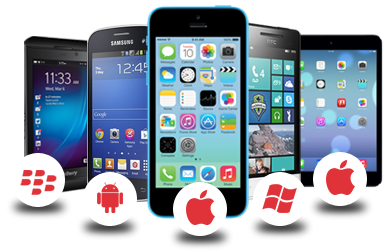
As mobile learning continues to increasingly make its way into the physical and online classroom, app development is one of the areas I have been interested for some time now.  There is no question that there is a plethora of apps that can address a number of educational learning needs whether a child is practicing basic addition/subtraction to college-level groups of students collaborating on planning documents with Google Drive on the go.  In my initial research into app development revealed that coding languages such as Java, C++, Python, Corona-One, and Ruby to name a few is necessary.  However, over time and further investigation, I began noticing a number of applications and services that require less of needing a programing language knowledge base but including a more graphical user interface instead.  This is similar to building web pages now where you don't have to have a working knowledge of HTML code.  Below are several cloud/Web-based applications I encountered that can potentially offer easy-to-use interfaces for creating educational mobile apps.
  1. App Press.  This is a Web-based app builder that targets iPhone, iPad, and Android applications.  App Press uses a Photoshop-like interface for assembling visual assets via layers.

  2. EachScape.  A cloud-based builder that provides a drag-and-drop interface for native iOS and Android apps as well has HTML5 Web apps.

  3. iBuildApp.  This easy-to-use builder provides customizable templates for iPhone, iPad, and Android apps.  No coding required as well.

  4. AppGyver.  This is another drag-and-drop builder that aims at iOS and Android apps.  Apps can then be published to Apple's App Store and Google's Play Store.
From an instructional standpoint, there are apps that simply don't fulfill a particular learning need.  It would be great to have mobile apps made in no time.  However, some level of technical "know how" and time are required to accomplish such task.  As with many learning technologies, time consumption is not always an option for faculty.  As an instructional designer, I would be interested in creating a Baylor faculty development app where instructors can book resources such as our video and audio booths and sign up for training sessions Online Teaching and Learning Services host.  In addition, the same app could contain training resources such as quick "how-to" videos for using Canvas tools such as creating screencasts with Kaltura or implementing quiz options to deter cheating or other forms of academic misconduct.  Let me know your thoughts and interests in app development!

Thursday, March 2, 2017

Instructional Content I've Produced

Depending on the complexity of course content and concepts, relying on ready-made instructional media and resources is not always an option.  In some cases, pre-existing media may be to vague, unclear, contain poor quality audio and/or video, or simply not align to the unique learning goals and objectives established for your course.  Producing self-created instructional media, although time-consuming in some instances, may be necessary.  The embedded video below I created was used specifically for a 5-week online summer section of the MIS 1305 course I taught in 2016.


Last summer, we used textbooks from Cengage publishers.  Cengage's online system, Skills Assessment Manager (SAM), was used in order for students to submit assignments/projects aligned to our texts, receive real-time feedback, and have opportunities to correct their work and resubmit accordingly.  Pre-existing videos, including resources created by Cengage, were a bit vague.  So the video above is the result of me creating a video that was much clearer in explaining the process for submitting SAM projects.  This video was created using Camtasia Studio 8 for Windows/PC and uploaded/distributed using Kaltura through our Canvas LMS.

Sample of Ready-Made Content

Curating pre-existing, or ready-made, content to support instruction saves instructors a significant amount of time from having to create self-produced instructional media.  In my own teaching practices, I always search text publisher resources and the World Wide Web before identifying a need to create my own media.  In my 17 years of teaching in higher education, I have found myself producing my own media and curating pre-existing media/instructional resources.  The embedded YouTube video below is an actual resource I use in Canvas for my current MIS 1305 course that is being taught on campus face-to-face.


The video above explains to students how to submit grader activities through the MyITLab online system that is a companion resource to our textbooks by Pearson Publishers.  This resource is made available through the Canvas LMS and can be accessible for students in face-to-face and online sections of 1305.  In addition to curation, an added benefit to using these ready-made resources is that time I save by not having to recreate media that already addresses a need or goal I have for my students. 

Asynchronous Communications: The Discussion Board

Discussions boards are one of the most commonly used tools to facilitate dialog in online courses.  These boards allow for back and forth communications between students and instructors asynchronously over a period of time.  Students are able to reflect upon their own ideas before sharing them with their classmates, leading to deeper discussions and learning.  Additional benefits of integrating discussion boards into online courses include:
  • Building a sense of learning community through sharing ideas,
  • Provides students extra time to reflect on their ideas, research, and develop their responses before sharing their thoughts, and
  • Help facilitate learning by allowing students to reflect and respond to the work of others.
The image below is a snapshot of an introductory "icebreaker" activity I had students participate in for a summer online version of the MIS 1305 - Introduction to Information Technology and Processing course I teach occasionally.
Discussion board thread in the Canvas learning management system
In my own instructional practice, discussion boards have played an important role in all fully online course that I have taught.  Through varied structured designs, I rely on discussion boards to manage the text-heavy responses.  As illustrated in the image above, Canvas discussion boards create an indented hierarchy of posting to show learners who replied to who and when.  This visual queue makes following a discussion much more efficient for both students and me as the instructor.   One added benefit to contemporary discussion boards is that students can embed other types of media (i.e. images, audio, and video recordings) into their postings besides text.  This is a great enhancement to traditional discussion boards as students can communicate asynchronously in creative ways beyond text.

Monday, February 13, 2017

An Excellent Podcast for Higher Education Faculty

The #HigherEd hashtag on Twitter is one of the key channels I follow to stay abreast with the latest trends and topics of discussion for a variety of higher education contexts.  A few months ago, I ran across a link with the #HigherEd hashtag to a podcast episode talking about the value and challenges of recording videos for classroom instruction.  This episode, entitled  PA025: Recording Videos for Your Classes, was part of the Professional Adjunct Podcast series.  After listening to several recent and past episodes, I would highly recommend any faculty member, from adjunct to full professor, interested in best practices and teaching/learning in general to subscribe to this podcast.  Users can subscribe to the podcast via iTunes, Android, or any RSS reader.  Enjoy!

Thursday, February 2, 2017

A Key #EdTech Blog I Follow

One of the most useful blogs I have been following for many years now is Free Technology for Teachers by Richard Byrne.  The main characteristic that qualifies this as a blog is that the latest post, common in most social media services/tools, is always at the top of the page.  A second characteristic is that I can subscribe to it.  Third, I can search to an archive of past postings.  Lastly, blogs are reflective of Web 2.0 meaning that we are now creators of content, not just passive readers of content (i.e. Web 1.0 such as the AOL and Netscape days).  This blog's primary purpose is to share free technology resources for teachers that can have implications for classroom instruction.  Although there tends to be a K-12 focus, I have found that most of the resources can be used in higher education as well.  Mr. Byrne is a former high school teacher so that's part where the K-12 theme comes from.  To keep up-to-date with postings, I subscribe to the RSS feed using Feedly.  With Feedly (I migrated to this tool when Google Reader retired), I can subscribe to multiple blogs related to instructional/educational technology and see the posts on one single page.  Over the years, I have frequently re-posted links to these originating blog postings to several social media channels such as Twitter and Diigo in order to share my findings to a much larger audience.

Tuesday, January 24, 2017

My Quick Thoughts on Twitter to Support Learning


Image from storify.com
The short answer to the question “can this tool (Twitter) meet an instructional need?” is yes.  First, Twitter can be a valuable research tool for finding instructional resources, research, blogs, etc. through the use of hashtags.  Using Twitter as a research tools saves a significant amount of time as others already identified resources that may be useful and tagged the posting to share with a much broader audience. The Twitter feed below is an example that shows how postings with the hashtag #edtech are currated making the search process much more efficient.  Second, the 140-character limitation of “tweets” also forces individuals to keep posts short and to the point.  Well-written tweets quickly identify the resource and its purpose.  The third, and one of the most important uses of Twitter in my opinion, is establishing connections with other individuals that have similar interests.  Whether you’re interested in educational technology, science, math, biking, fishing, gaming, or e-learning, Twitter makes it very easy to find and connect (i.e. follow) to others with these similar interests......an essential component of a personal learning network (PLN).  

Twitter’s learning curve is not steep at all.  I have been using Twitter since April 2009.  Twitter’s interface parallels with several contemporary social media services such as Facebook and blogs where the most recent posts are always at the top of the feed.  Twitter also integrates with Facebook, mobile devices, Feed.ly, the Canvas learning management system, and a wide variety of Web-based applications that makes sharing resources to a large audience in a short amount of time quite efficient. 

Wednesday, October 22, 2014

Instructional Strategies for Enhancing Learning in Online Courses

Teaching in an online environment often presents challenges to faculty members, especially for those that have limited to no experience teaching fully (and even blended/hybrid) online courses.  When online courses remove the face-to-face and seat time elements of traditional courses, faculty must re-think and assess the way they teach and engage adult learners.  Below, I present five instructional strategies to consider that have helped me make the transition to teaching online.


Vary the learning activities.  Implementing the same activity across lessons or units will quickly add boredom and disengage learners. Additionally, you will notice many students tend to duplicate their responses across discussions, assignments, and in their writing when using the same activities.  Consider switching between discussions, collaborative tasks, individual tasks, case studies, reflection papers and reading briefs, blog and journal entries, presentations, and end-of-module live web conferencing sessions.  For example, in one unit/module use a structured threaded discussion in your LMS (learning management system) where students are responding to posted questions and engaging in ongoing dialog with peers and the instructor.  Then, in a later unit/module, instead of a thread discussion board, have students post responses to discussion posting to a blog (i.e. WordPress, Blogger, Edublogs, etc.)

Monday, August 11, 2014

Just A Few More Common Mistakes to Avoid in Online Course Design and Development

As a follow up to my 5 Common Mistakes to Avoid in Online Course Design and Development and A Few More Common Mistakes to Avoid in Online Course Design and Development posts, I wanted to share a few more mistakes that I have been guilty of and observed higher education faculty face themselves in the online course development process.


  1. Mistake #8: Not giving yourself enough time to build your online course.  Faculty members are busy.  Whether you're a graduate teaching assistant, an adjunct instructor, or tenure-track (or non-tenure track) professor, we are continuously upholding our teaching, research, and service responsibilities resulting in becoming overwhelmed.  You may even be tempted to delay building and designing your online course; however, doing so typically rushes course creation and causes quality to decline.  This frequently occurs during a learning management system (LMS) migration period or during the summertime when faculty are teaching an online course for the first time in the upcoming fall semester. 

    My suggestion:  Begin building your course 16 weeks or more before the course start date, and establish developmental benchmarks along the way.  By beginning the course development process early, it becomes much easier to focus on course quality and devote time to other to other priorities.


Wednesday, July 30, 2014

A Few More Common Mistakes to Avoid in Online Course Design and Development

As a follow up to my post 5 Common Mistakes to Avoid in Online Course Design and
Development, there are few more mistakes with suggestions that I wanted to share with you. 

  1. Mistake #6: Responding to student email 24/7. We often hear the phrase "anytime, anywhere learning" when we read or discuss online learning with our colleagues. For many learners "anytime, anywhere" means just that. Learning and engaging in course activities can occur at 2 p.m in the afternoon or at 2 a.m. in the morning. Additionally, the instructor may be in Texas, but students may be in New York, Orlando, India, China, Spain, Nebraska, West Virginia and so on.  Many students in online courses will email instructors with questions regarding their grades, an assignment, the syllabus, etc. and expect an immediate (or very quick) response from the instructor.  The reality: instructors have lives and other obligations outside teaching their online class(es).  Instructors are not on their computers or smartphones 24 hours a day, 7 days a week.  With easy access to mobile technologies that surround us 24/7, we, as instructors, frequently find ourselves responding to student emails at home during family time, while running important personal/family errands, and so on.  This mistake can be easily avoided in several ways.

    My suggestion:  Clearly state, at least in your syllabus, a reasonable response time that you will respond to students' email inquiries. 

Monday, July 28, 2014

5 Common Mistakes to Avoid in Online Course Design and Development

In my 12+ years of teaching face-to-face, blended, and online undergraduate and graduate-level courses in higher education and current role as an instructional designer, I've encountered and observed many mistakes in instructional delivery, learning design, and student engagement.  The old saying "learn from your mistakes" has held true in my own instructional practices from my early days as a graduate assistant teaching technology skills in a computer lab to the later days of being a tenure-track assistant professor designing and delivering fully online graduate-level courses in instructional design from scratch.  Along this journey I've picked up many "do's and don't" of teaching online and engaging learners in online environments.  My main point...........we all make mistakes along the way, especially when teaching online.

Below, I outline common mistakes with online course design and development that I've encountered in my own instructional practice and continue to observe in my current instructional designer role.  Additionally, I provide suggestions on how you can avoid these mistakes.

  1. Mistake #1:  Using too many new tools at once OR not using any new tools at all.  Instructors are frequently introduced to LMS tools and capabilities, LTI's (learning tool interoperability), blogs, Google apps, cloud storage, and many other online learning tools.  Some faculty will shy away or avoid these learning technologies all together while some faculty are ready to dive in and use as many tools at once.

Friday, July 18, 2014

Flipped Classroom Strategy 4: Muddiest Point (In/During Class Instructional Strategy)

Initial Thoughts and Introduction

In my continued research into flipped learning and its implications in the university/college
classroom, I'm amazed at the creative strategies faculty members use to engage the adult learner and make the best use of class time.  As a current instructional designer at my respective institution, I find myself reflecting on my own past teaching experiences as an educator (tenure-track professor, adjunct, and teaching assistant) in higher education and past leadership experiences as a technology integration administrator working directly with K-12 teachers.  More specifically, two themes begin to emerge in my mind from both higher education and K-12 sectors: instructional strategy and assessment.  In a recent presentation on flipped classrooms I delivered during a summer faculty institute, I used the appropriate term formative assessment in my discussion of how the higher levels of Bloom's Taxonomy applies to the section of both (a) instructional strategies and (b) assessment techniques to identify student understanding (or lack of) throughout the learning process. 

Friday, June 20, 2014

Flipped Classroom Strategy 3: Think-Pair-Share (In/During Class Instructional Strategy)

A common yet important point about the flipped classroom in discussions among higher education faculty and instructional designers is the fact that there is no one right way or strategy for the flipped method.  This includes the strategies implemented before, during,
and after class time.  However, in addressing the question what is the best use of class time? that is central to the flipped classroom, it is important that we explore the active learning strategies that we are seeing faculty implement in successful yet engaging flipped classroom/learning environments.  One such active learning strategy is think-pair-share.

Monday, June 9, 2014

Flipped Classroom Strategy 2: Identify Where to Flip and Start Small

In a recent presentation, entitled The Flipped Classroom, I delivered to higher education faculty at my current institution, we began our dialog reviewing various definitions of the flipped classroom.  Early definitions and interpretations simply reversed when homework and lectures took place: students watched recorded "lectures" outside of class and in-class activities would normally involve applying what they learned from the videos (i.e. the homework).  More contemporary and refined definitions, such as the one below by the Flipped Learning Network (FLN), describe the flipped classroom as a unique learning environment that requires careful planning, but focuses on learning.  

Flipped learning is a pedagogical approach in which direct instruction moves from the group learning space to the individual learning space, and the resulting group space is transformed into a dynamic, interactive learning environment where the educator guides students as they apply concepts and engage creatively in the subject matter. (FLN, 2014).

Monday, June 2, 2014

Flipped Classroom Strategy 1: Taking Notes with VideoNot.es

Instructors who had success with flipping their classrooms realize that students have to take initiative and be held accountable for viewing content (i.e. videos, text readings, websites, etc.) before class and time is dedicated to learning experiences in which students apply what they have learned.  A common question, however, is "how do I know my students are watching the videos (or readings) before they come to class?"  This is a valid question that needs to be addressed for a successful flipped lesson or module/unit to be implemented.  One common strategy instructors implement is to have students complete a short assessment through a learning management system's (LMS) quizzing/survey tool or Google Form to (1) hold students accountable for watching or reading content prior to class and (2) to self-assess understanding of a concept or other content presented on the video and/or reading.  As an additional incentive, instructors may make completion of these short assessments as part of an assignment or participation grade.  Another "before class" strategy in conjunction or in replacement of a traditional short assessment is to have students summarize or identify "burning" questions that students may need some brief explanation on at the top of the face-to-face class session.  

One tool worth exploring in supporting "before class" writing tasks in the flipped classroom environment is VideoNot.es.  VideoNot.es allows users to watch a video that resides on a video hosting service, such as YouTube and Khan Academy, on one side of the screen while having the capability of typing notes on the other sides of the screen (see image below).

Students can easily take notes, write summaries, and/or jot down questions regarding the contents of the video.  Currently, VideoNot.es works with video content posted on YouTube, Khan Academy, and Vimeo.

VideoNot.es integrates with Google Drive as an added application.  You can learn more about enabling additional applications within Google Drive here.  Because of this seamless Google Drive integration, students can easily open/modify their video notes and even share their notes with other classmates and/or the instructor.  Best of all...VideoNot.es is free!

To get started, visit VideoNot.es and click on the green "Connect with Google Drive" button.

Do you have experience with VideoNot.es?  Do you have other tools or ideas for "before class" activities/assessment in flipped learning environments?  Share your experiences and ideas in the comments section below.

Wednesday, May 28, 2014

Getting Started: 10 Tools to Flip Your Classroom

In my continuous research on flipped classrooms primarily for higher education contexts (and K-12 too), I frequently encounter Web-based tools and mobile apps that tend to focus on screencasting or video recording tools.  This is somewhat of a double-edged sword because flipped classroom/learning discussions frequently emphasizes the use or viewing of online video content outside of class, but on the other hand the flipped classroom/learning is really not about the video; it's about this question: what is the best use of class time?


In any case, I thought it would be more helpful to organize flipped classroom tools and resources into categories aligned to the flipped classroom planning process; not just video creation and editing tools.  

Tuesday, May 20, 2014

Common Myths About the Flipped Classroom...My Two Cents

The flipped classroom, as with any disruptive innovation in education, has naturally become surrounded by myths based on conceptual misunderstandings, fear of change, and experiences or observations yielding undesirable results in student learning.  In this post, I want to share a number common myths about the flipped classroom based on my experience flipping lessons in higher education, discussions with faculty members who are interested in flipping lessons as well faculty who have had "less than desirable" experiences in attempts to flip a lesson, and through my continued research on the flipped classroom.  Additionally, I plan to identify truths about, or debunk, each myth.  Check out this video if you want a quick review of what the flipped classroom is.

To kick things off, I will identify common statements or thoughts about flipped classrooms/learning through a series of opinion polls.  Are these statements "true" or "false?"  Tell us what you think by following the instructions below.

Instructions

  1. On each page, including this one, you will be presented with a True or False statement.  There are 6 statements total.
  2. Select your True or False response, or view others' responses to the given statement.  There is no need to worry, there is no record of who answered any given question.  Answer honestly.
  3. After submitting (voting) your response, move to the next poll statement by clicking on the NEXT STATEMENT link located below each opinion poll.  This will take you to the next poll in the series.
  4. At the end of the poll series, click the FINISHED link to be presented with specific myths about the flipped classroom along with their truths intended to debunk the respected myth.


NEXT STATEMENT >>